
1890 - 1929
The community association movement in Calgary dates to the Ratepayers Associations and School Associations of the late 1890s. Ratepayers Associations represented residential interests and advocated on key political issues, taxation and financial accountability. While they focused on the provision of basic services (ex. paved streets, lighting, garbage collection, etc.), they were ultimately responsible to the issues and concerns of their community. School Associations were more active in sports and recreation.
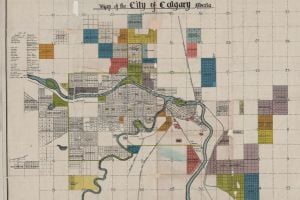
1908: Map of The City of Calgary
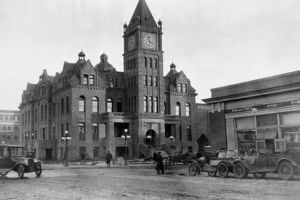
1922: Calgary City Hall
The Bridgeland-Riverside Community Association “started as informal ‘get-togethers’ to
organize community recreational activities, such as hockey and soccer.” (Source: City of Calgary, History of Community Associations)
Calgary Herald, April 30 1989
The City plan envisioning{ed] [a] patchworkof subburbs with recreational areas linked to schools[. This plan] provide[d] impetus for the first community associations.
This act allowed community associations to incorporate as non-profit socieities further formalizing community associations.
The Parkhill Ratepayers and Community Association incorporated in 1929, which was eventually struck and replaced by the current Parkhill Stanley Park Community Association in 1955.
1930 - 1949
The first organization in Calgary to incorporate with the ”community association” name under the Societies Act was Elbow Park on January 18, 1930. By 1934, two others—Mount Royal and Scarboro—followed, marking the early adoption of the community association movement. Over time, these groups increasingly sought official status as incorporated non-profit societies under the Societies Act of Alberta. While their mandate was similar to Ratepayers Associations, they also provided sports and recreation opportunities and helped build a small-town feel in a growing urban centre. Ratepayers Associations started to adopt the community association name.
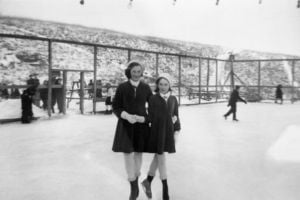
1936: Scarboro Community Rink
Elbow Park Community Association incorporates under the Societies Act on January 18, 1930.
More community associations incorporate, including Mount Royal Community Association and Scarboro Community Associations in 1934.
1945: The first listing of “community associations” appear in the Calgary Municipal Manuals
As community interest became locally directed, and the population boomed after WWII, the community association movement gained institutional acceptance.
1950s
Community associations became an integral feature of local communities, growing with Calgary’s population and suburban development. For almost a decade, the existing associations formed a federation for each city quadrant. They became fierce advocates for community interests in municipal government. As their advocacy efforts expanded, they saw the need to have a more formal unified voice in municipal affairs.
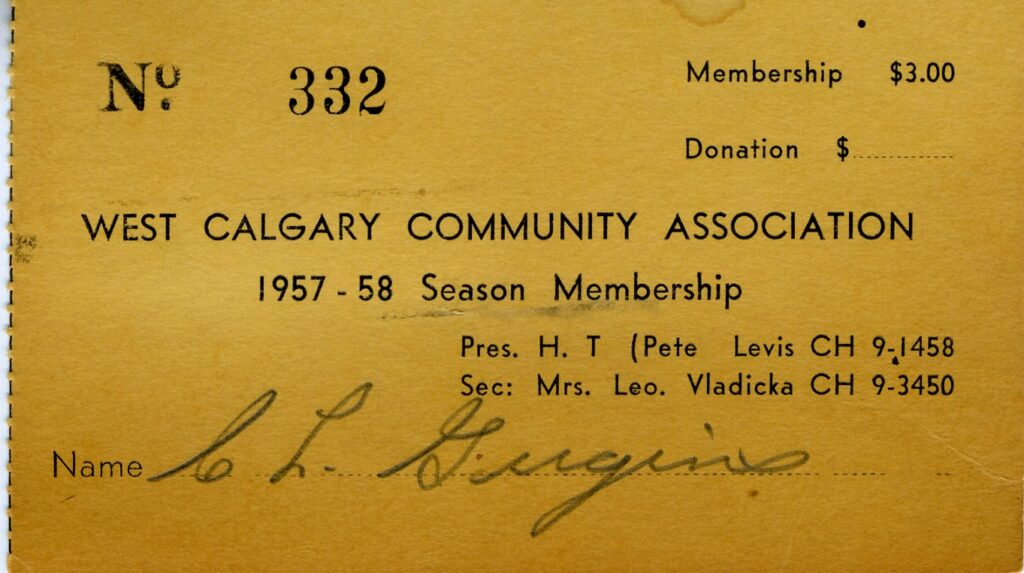
1958: West Calgary Community Association Membership Card
As communities expanded so did the number of community associations.
May 13, 1958, Graham Smith wrote a letter to the mayor and the Board of Commissioners on behalf of the Federation of Calgary Communities south west area of the city requesting the city attend the meeting to extend branch library facilities in this area as soon as practicable.
Inspired by the Edmonton Federation of Community Leagues (EFCL), which was founded in 1921, Graham Smith called a meeting to establish unified Federation. EFCL’s President, Charles Simmonds, attended the meeting. As support for a unitied Federation grew, some early community associations were so eager to join that some even submitted membership fees before our official launch in 1961.
1960s
In 1961, 47 community associations came together to form and officially incorporate the Federation of Calgary Communities under the Societies Act. We were formed to unify the members’ voices on community issues, development and community well-being. Community associations joined us as a means of supporting community and civic participation.
However, The City’s goal for our organization was to ensure “one voice for all community associations with regards to sporting activities,” and only provided funding to expand recreation and sporting activities, like soccer and softball.
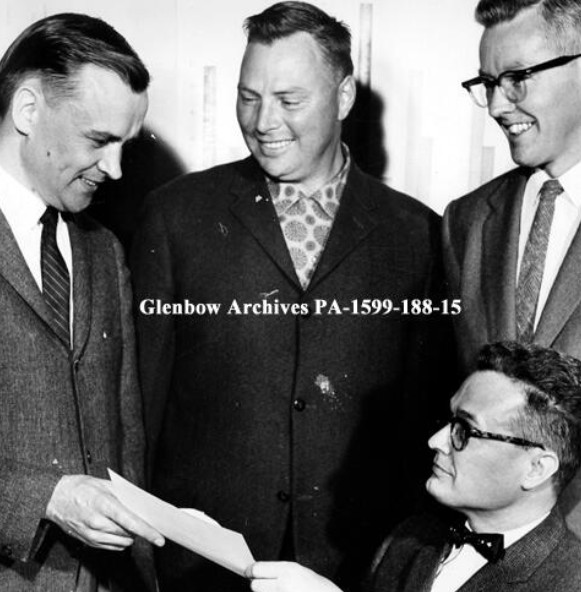
1962: Our executive President Bruce Coombs, Donald Mathewson, Hugh Morgensen and Bill Wearmouth
Our first president was R.R. McDonald, and Federation membership only cost $5 per community association.
We hosted a political forum in partnership with the Calgary Junior Chamber of Commerce (The Calgary Council of Home and School Association in 1966) to stimulate interest in Civic Election. We organized the event but adhered to our original constitution by acting as a neutral party.
We launched Community Association Week to encourage residents to join local associations. This initative would later transition into Community Association Awareness Month.
Because The City funded the Federation to organize minor sports, by the end of the 1960s, we faced challenges from the membership. They questioned whether we were acting as a unified voice on community issues, development and community well-being. Membership declined.
1970s
We expanded our capacity to support members by hiring our first staff and opening our first office in 1971. Throughout the decade, we increased advocacy, education, and support for funding and policy work. We defined our core focus areas—recreation, public service, community organization, development, and communications. We also started providing more services, including printing, insurance and planning services. Throughout the decade, we faced financial instability.
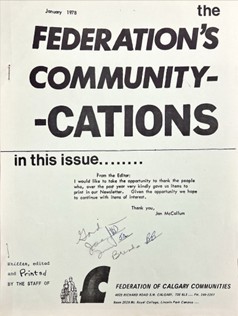
1971: Federation’s Community-cations newsletter
1971: We publish our first community newsletter and hosted a 30 minute cable show
The first three hired staff formed a company to ensure they are properly paid business expenses. A City audit determined that this was to the sole advantage of the President of the Federation. All three staff resigned from their positions.
Due to disagreements over our role, the organization of sport separated from the Federation, taking most of our financial resources with them. They formed Calgary Minor Sport.
Despite a financial scandal, membership peaked in 1978, with 90 out of 105 community associations and 150,000 paid community association members.
Recognizing a focused need for advocacy on urban planning matters, we began offering support to community associations on planning issues.
1980s
We continued to foster relationships between community associations and City Council and contributed our expertise to civic and provincial policy. Leaning in to this relationship, in 1984, Mayor Klein issued a proclamation declaring Community Association Membership Week. As community association needs changed, we responded by expanding and diversifying our services. We grew our volunteer trainings and resources, hosted monthly learning sessions, provided education and a platform for community discussions.
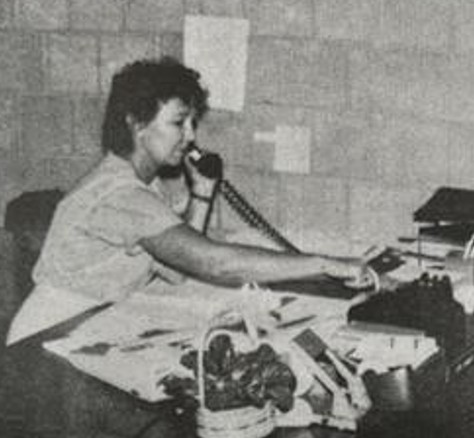
1983: Heidi
Heidi joined the Federation as the bookkeeper, operated the print press and offered financial consultations to community associations.
In 1983, we hosted the “Heart of the City” conference, which focused primarily on urban planning topics.
In 1985, we published our first “workshop guide.” Our workshops included the:
- Secretary’s Workshop
- Insurance Workshop
- Newsletter Workshop
- Board Training/Parlimentary Proceedures
Calgary Herald, September 20, 1984
Without volunteers our society would be a much poorer place and not only do the recipients benefit, but there are also rewards for the volunteers. Sept. 15 to 22 has been designated Volunteer Week[.]
Calgary Herald, April 30, 1989
Community associations become a big civic force […] Ald. Al Duerr says community associations have become so powerful he treats them as political entities.
1990s
We focused on high-impact initiatives, including launching Partners in Planning, founding the Friends of the Federation, revising our liability insurance program in partnership with Smith Insurance (now Navacord), building our financial audit program, incorporating networking opportunities to build a peer-support network and providing group benefits for our member associations. We opened our membership to include other community-based non-profits. We continued to offer networking opportunities, volunteer training and resource-sharing to our members. We continued to modernize operations by launching our new website, improving administration meetings and community association boundary mapping.
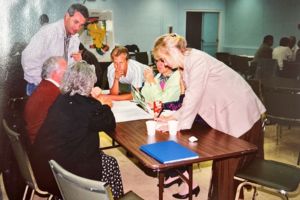
1990s: Federation planning activity
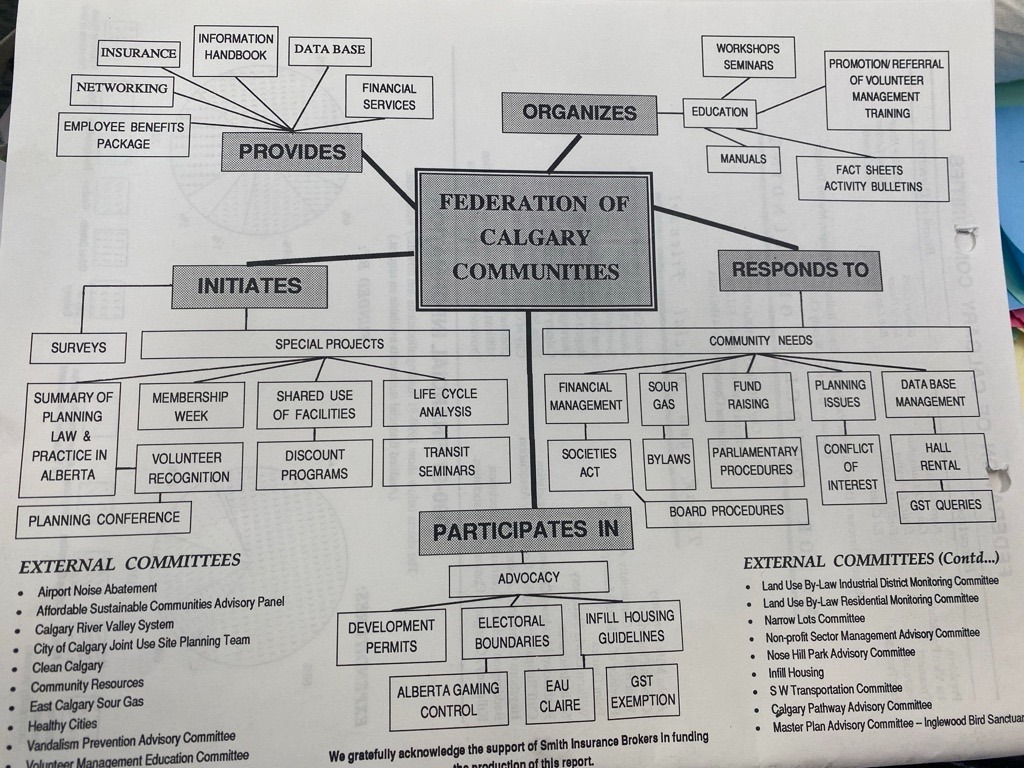
The Federation’s expanded services to community associations
We compiled the number of hours community volunteers spent volunteering in their communities. If these jobs had been performed by paid staff it would have cost over 22 million dollars. We presented a symbolic cheque to Mayor Al Duerr and City Council representing the value of community volunteers’ contributions to the city.
As community associations became a powerful voice in city planning, major developers noticed the influence of local activism. In response, we hired our first urban planner to provide a “community perspective.” Their specific duties included creating a planning manual, facilitating communication between communities, creating a library of information accessible to communities and representing the Federation on various community concerns.
In 1994, Heidi completed 20 community association audits providing financial assurance to The City and building volunteers’ capacity. In 1997, she registered her public practice.
The Guide to the Planning Process was created and was incorporated into the University of Calgary undergrad program for Urban Design. In 2009, The Alberta Real Estate Foundation funded its update.
We launched the Community Hero Awards, with the support of Smith Insurance (now Navacord), to honour local community volunteers.
“The Friends” became a registered charity, and began partnering with community associations on specific projects to enhance neighbourhood life in Calgary.
Showing aptitude for being on the cutting edge, we launched our own website. The goal was to be able to include all community associations and provide links to some City of Calgary services.
2000s
This was a decade for strategic growth. In 2001, we did an organizational assessment, and the board executed a new strategic plan, which included expanding and developing new programs and partnerships to support our members. We supported broad city planning through the imagineCalgary Plan and Partners in Planning became an award-winning certificate program. We launched our first official “member services” department to provide one-on-one support and education. We partnered with The Calgary Foundation to help communities access different funding opportunities. We took on a leadership role in promoting inclusion through multilingual resources and cross-cultural partnerships. With new leadership in 2007, strategic direction and expanded programming, the end of the decade saw a huge resurgence in memberships.
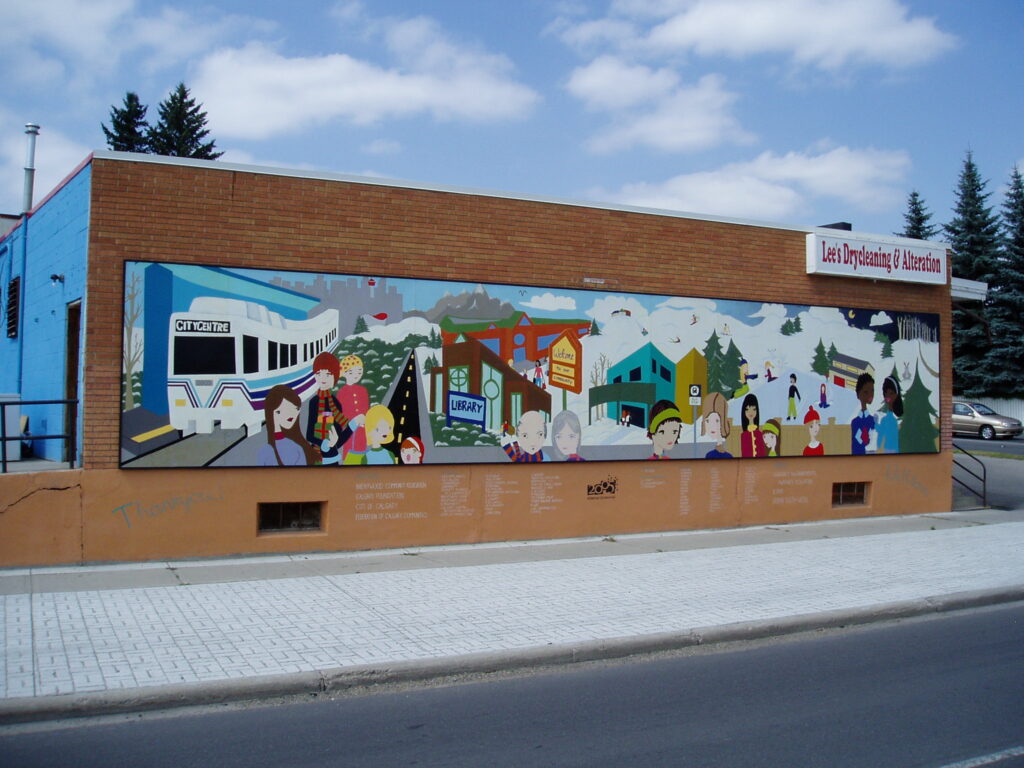
2006: The Friends support Brentwood Mural project
We received an Award of Merit for Partners in Planning, an educational program, in partnership with The City of Calgary, that educates community volunteers on the planning process.
In 2005, we co-created the “Building Communities” Stampede parade float with the Islami Muslim Council.
With new leadership, we started a new chapter, grew programming and membership, and reengaged community associations.
For decades, we kept a database of emails and mailing addresses for community volunteers.In 2008, using free technology, the newsletter was sent out to more than 1,500 volunteers, personalized with their first names at the touch of a button!
We secured two years of provincial funding to launch “member services,” a new department that provided resources, one-on-one support and education. The Resource Library was moved online, so volunteers could access it anytime.
2010s
We increased our advocacy, and service areas exponentially. We added a third and fourth auditor to our Audit Program, as demand for this unique service increased. Servus Credit Union partnered with us to support financial literacy training for volunteers. We hosted political events like Meet the Provincial Ministers and became regular Calgary Stampede participants. After taking over Calgary Block Watch, we launched “Building Safe Communities” in partnership with The Calgary Police Service. The 2013 flood impacted many of our member communities and saw us take on a leadership role in community emergency response. We even expanded our community support by introducing two new grant programs, Energizing Spaces powered by ENMAX in 2015 and ActivateYYC in 2017. As a grant administrator, we began to champion community-led initiatives across Calgary.
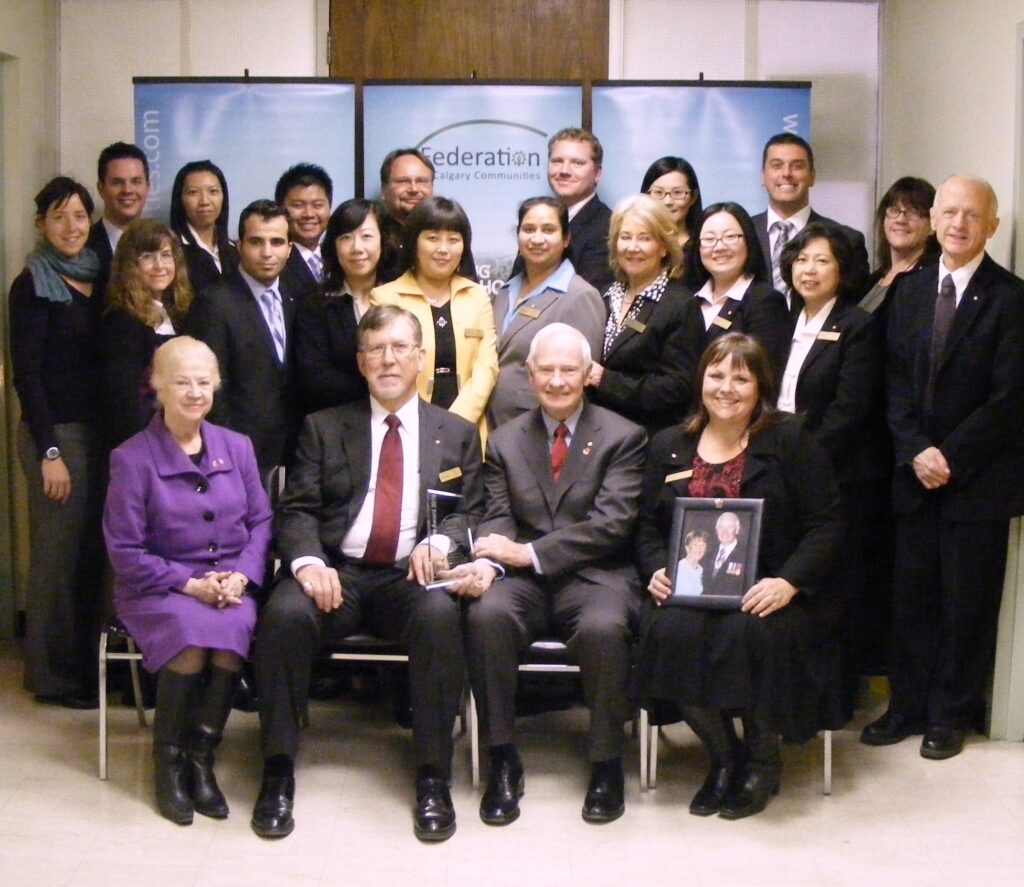
2010: Governer General visited the Federation
2018: Under the Rainbow, Hillhurst Sunnyside ActivateYYC project
We developed resources and promoted neighbourliness as a way to prevent crime in Calgary communities.
Thanks to the Federation’s ability to mobilize our extensive social network, we were able to mobilize resources faster than many other groups. In 2014, we joined Mayor Nenshi in launching Neighbour Day to celebrate community spirit.
We took a leadership role on volunteer engagement – as other volunteer groups and The City were contemplating liability. The Federation, due to our advocacy, has been appointed to numerous emergency response committees to capture our learnings.
We partnered with ENMAX to create Energizing Spaces, a grant program to replace old appliances and outdoor lighting.
We launched ActivateYYC to get people “walking, playing and being neighbourly.”
Because of our proven impact, The City doubled our operating grant, which included more funds for governance support and a second urban planner. By 2019, our audit program has four dedicated auditors.
In celebration of our 50th Anniversary, we announced that our network engages more than 20,000 volunteers, making us the largest collective volunteer effort in the city.
The Governor General’s visit to Calgary wrapped up with a visit to the Federation of Calgary Communities offices.
What began as Community Association Week in 1962, grew into a month-long campaign to boost community association membership.
2020s
During COVID, we supported our communities by advocating for funding for our members, acting as an essential communications hub and by supporting changes that continue to shape the volunteer sector. We also received funding from The Calgary Foundation to expand our financial literacy tools and support. We attained civic partner status with The City of Calgary, and took over Jane’s Walk from The Calgary Foundation. The board set new strategic direction to enhance member value, improve workplace culture and diversify resources. We added two more grants to our grants program, launched an Online Community Forum to connect our network with their peers, and secured a large multi-year grant to launch an innovation lab and grant program to position Calgary as a placemaking hub. 2026 will see the launch of this extraordinary initiative that will invest in community development across the city.
Throughout our 65 years, we’ve evolved. We’re not only a champion of community life in Calgary, but a resource for community volunteers, a grant administrator for community-led projects, a capacity-builder that adapts to the changing needs of our members, and a valued City of Calgary Partner.

2020: Drive-in AGM
Good Places Project launched in 2026!
As an accounting firm with four public practices and as an essential communications provider to our network, we pivoted to online services. Our training programs became virtual, and we partnered with Microsoft to teach volunteers how to use online tools. We even hosted a “drive-in” annual meeting to model social distancing.
The pandemic caused financial difficulty for many of our members. To help them, Toole Peet (now Navacord) created Action Grants, which offer $1,000 microgrants to support community engagement.
To encourage neighbourliness, we took over running Jane’s Walk from The Calgary Foundation.
We received “Civic Partner Status” with The City of Calgary. The City provided us with more funding to support community associations and social recreation groups, and to subsidize audit costs for these groups.
We developed resources and promoted neighbourliness as a way to prevent crime in Calgary communities.
We facilitated a Discussion with the Mayor to help strengthen open conversations between community volunteers and City Council.
We launched ClimateReadyYYC to help communities become more climate resilent.
After having five years of staff turnover, largely due to the pandemic, we conducted our first organizational culture survey. This survey aimed to ensure that our staff were engaged, supported and their needs were being met. A s a result, we initiated weekly culture meetings and teambuilding activities. We also started a Diversity, Equity, Inclusion and Belonging committee.
We recieved $2.85 million from the City to jumpstart placemaking across Calgary, and develop our new innovation lab and grant program.